An A320 IPT should begin with a defined training task
An A320 procedure trainer can support cockpit familiarization, normal-procedure teaching, checklist practice, crew coordination and classroom demonstration. These applications may use the same aircraft layout, but they do not always require the same hardware, software or instructor workflow.
Before requesting a quotation, define what instructors need to teach, what trainees need to operate and how the device will be used during a normal day. This gives the engineering team a practical basis for recommending the cockpit scope, visual system, room layout and delivery package.
1. Define the users and the learning objectives
A flight school may focus on cockpit flow, callouts, checklist discipline and crew-role practice. An aviation college may also need the trainer for system explanation, classroom observation and repeatable instructor-led lessons. A training center may require a more structured operator workflow and regular use by different groups.
List the intended users, their experience level and the exercises the trainer must support. This is more useful than asking only for an A320 cockpit, because it connects each hardware decision to an actual training objective.
- Cockpit layout and panel familiarization
- Normal procedures and checklist practice
- Captain and first-officer role coordination
- Instructor-led system and workflow demonstrations
- Basic flight and visual familiarization where included in the project scope
2. Decide how much of the cockpit must be represented
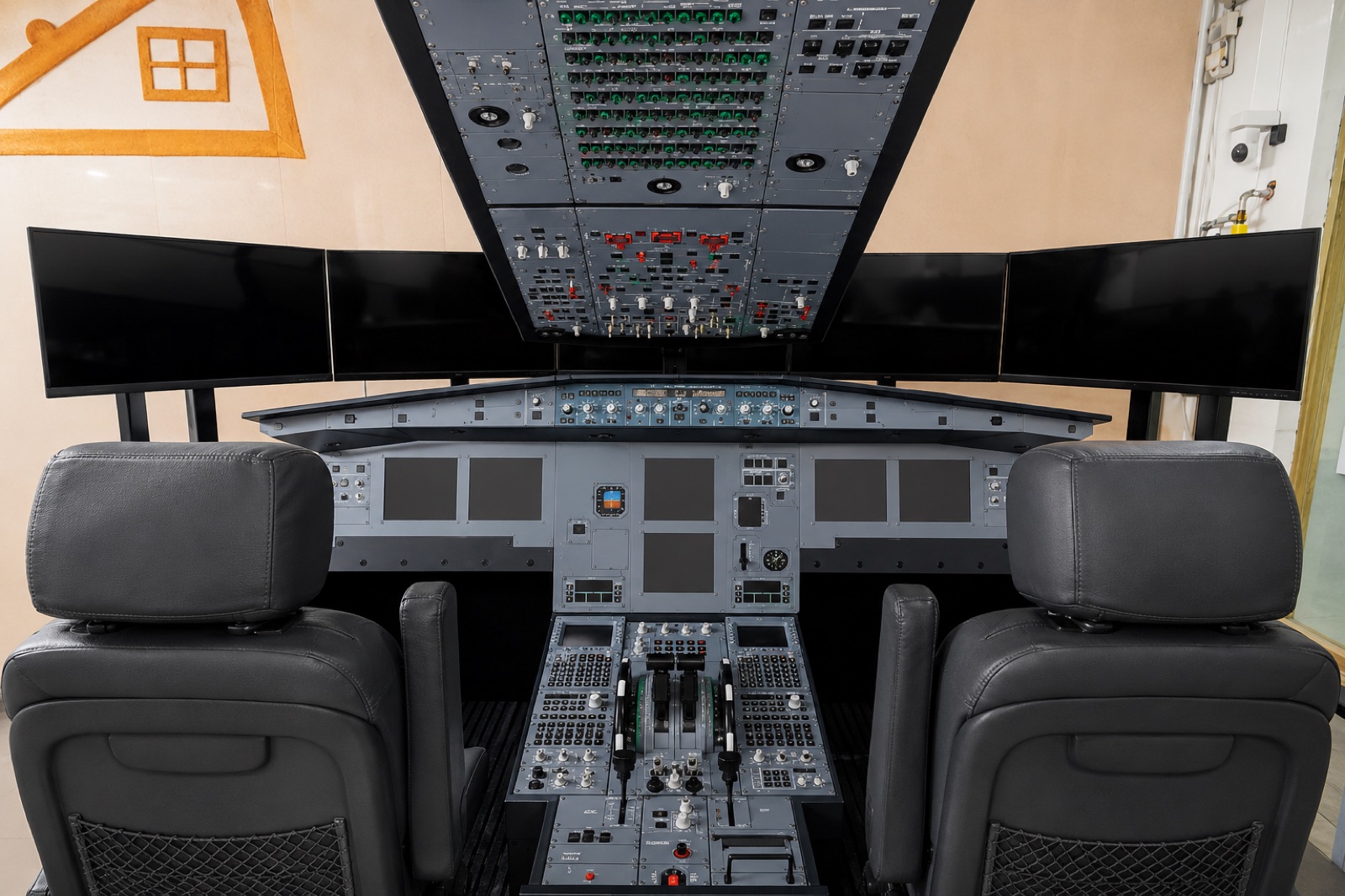
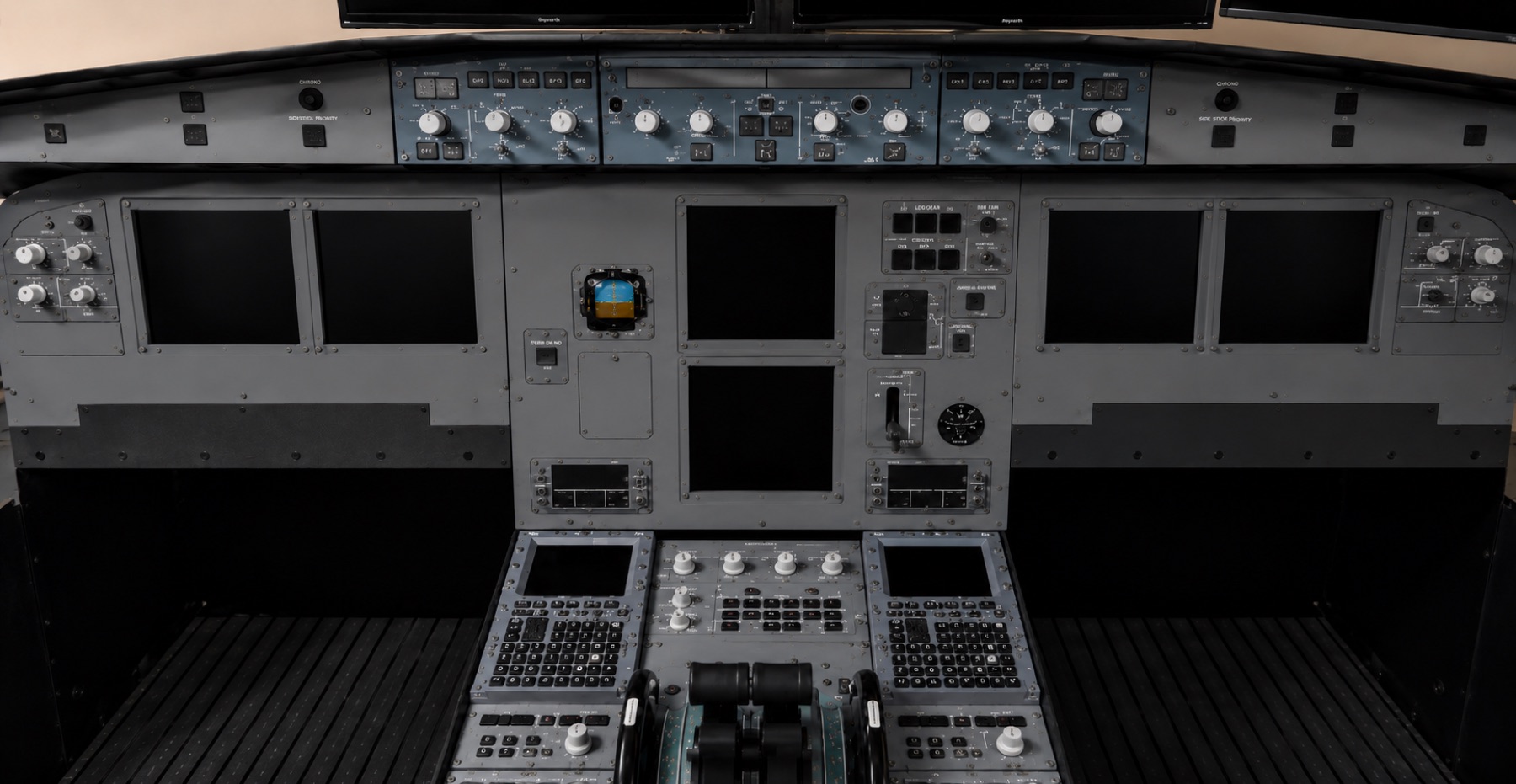
The required cockpit scope should follow the lesson plan. For procedure training, the main instrument panel, flight-control unit, overhead panel, center pedestal, thrust levers and flight controls may all contribute to the training flow. The buyer should also state whether the trainer will be used by one trainee, a two-person crew or a larger instructor-led group.
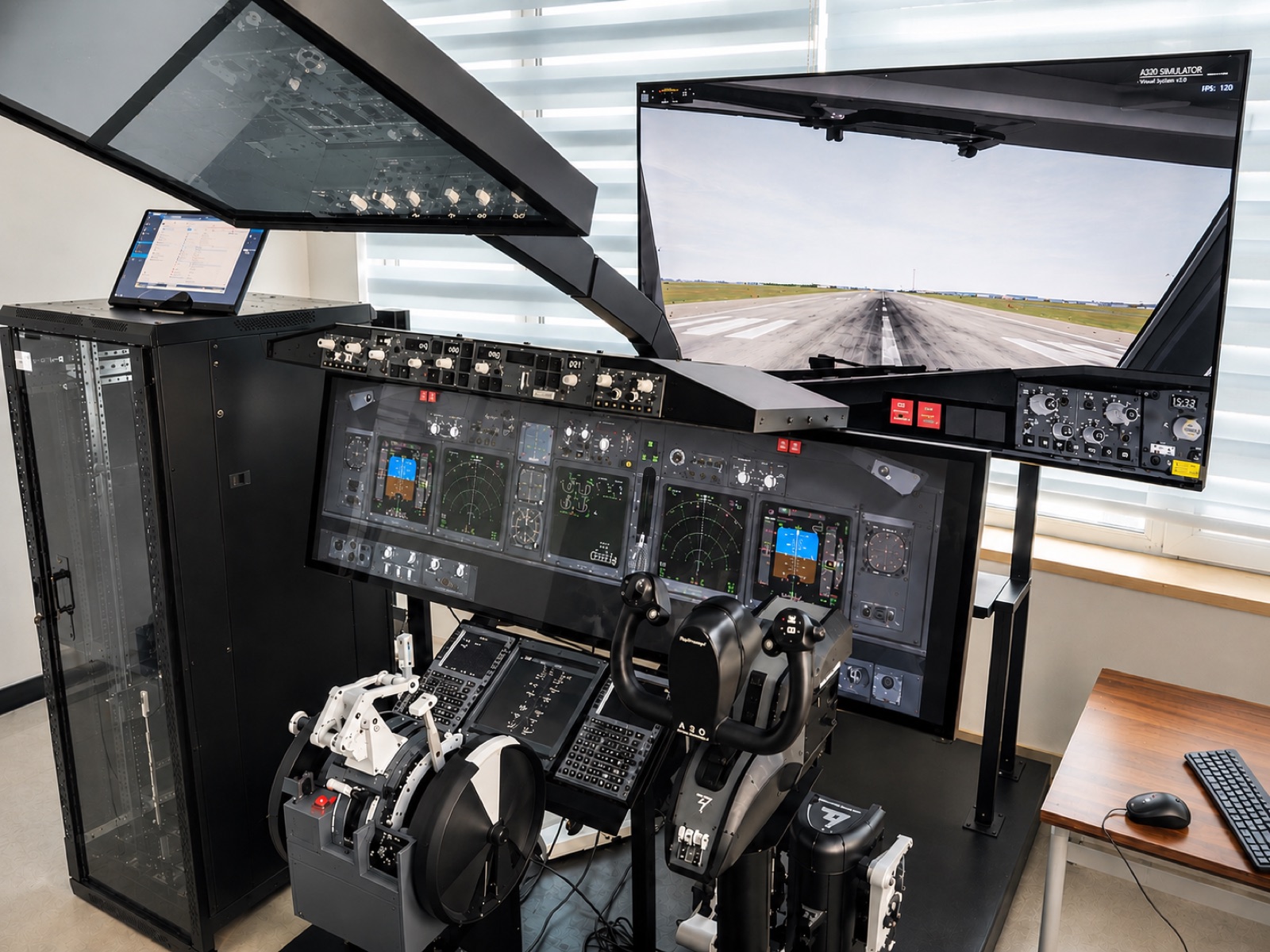
Foshan Dynamic's A320 IPT uses a one-to-one cockpit layout with A320-style controls, overhead and center-pedestal areas. The exact functional coverage should still be confirmed in the project proposal, because different training objectives may require different control, display and software integration scopes.
3. Match the visual system to the lesson—not only to appearance
A visual system can support guided flight demonstrations, orientation and a more complete cockpit environment, but its value depends on the lesson. For a procedure-focused classroom, stable presentation, clear instructor visibility and reliable daily operation may matter more than a large immersive field of view.
The standard A320 IPT product page lists three 55-inch displays. Confirm whether this arrangement fits the room, viewing distance and intended exercises. If a different display layout or visual coverage is required, it should be discussed before the quotation is finalized.
4. Plan the room and installation path early
The published reference footprint for the A320 IPT is approximately 3 × 3 metres, but the equipment footprint is only one part of room planning. The project also needs safe circulation, instructor access, seating, ventilation, electrical supply and sufficient space to assemble and maintain the trainer.
For an overseas project, provide the room length, width and clear ceiling height, together with door, corridor and lift dimensions along the delivery path. Photographs and a simple dimensioned floor plan help identify access or placement problems before production and shipping.
5. Design the instructor and crew workflow
A procedure trainer is most useful when instructors can run a lesson consistently and trainees can move through cockpit tasks in the intended sequence. Explain how a session starts, which crew positions are occupied, what the instructor needs to observe or control and how the next group will take over the device.
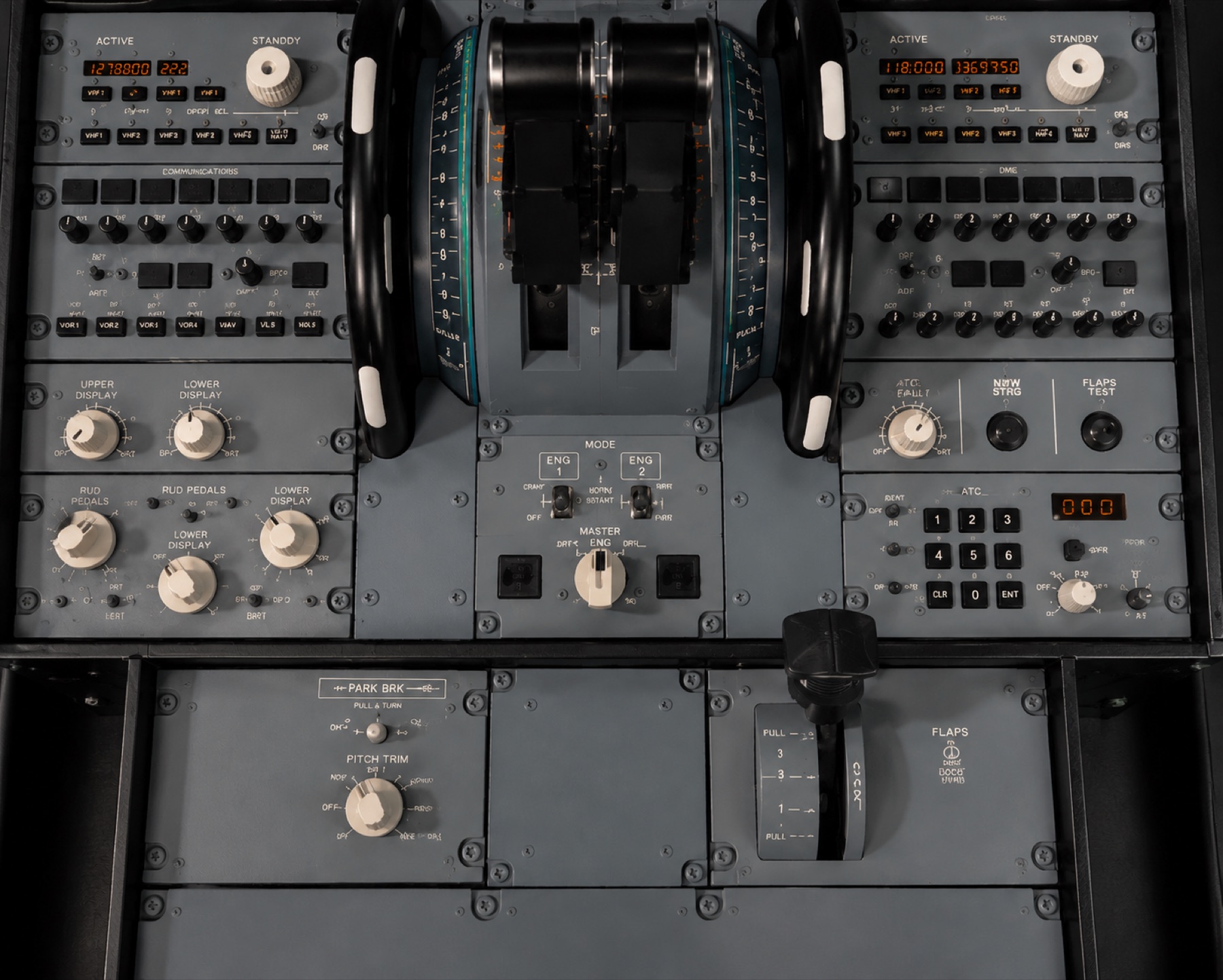
The center pedestal and thrust-lever area are central to many coordinated cockpit flows. Their required functions should be reviewed together with the overhead and main-panel scope so that the finished trainer supports a coherent lesson instead of a collection of disconnected controls.
6. Confirm software and lesson scope
Hardware appearance alone does not define the training capability. The buyer should describe the procedures, cockpit states, display behaviour and instructor functions expected during lessons. If particular scenarios or system demonstrations are important, include them in the inquiry so they can be evaluated during configuration planning.
A written list of required exercises also makes proposal comparison easier. It helps both parties separate standard functions from requested customization and reduces the risk of discovering a missing lesson requirement after delivery.
7. Clarify the quotation and delivery scope
Ask the proposal to identify the included cockpit hardware, displays, controls, computers, software integration, instructor functions, packaging, shipping, installation, commissioning, documentation, operator training and after-delivery support. The exact scope may differ by project and destination.
Do not compare two quotations by price alone if their hardware coverage, installation responsibilities or support scope are different. A useful quotation should make these boundaries clear enough for the procurement and training teams to review together.
8. Keep regulatory qualification separate from product configuration
Foshan Dynamic's standard A320 IPT is supplied as a training, education, cockpit-familiarization and procedure-demonstration platform. It is not supplied as an FAA- or EASA-qualified training device.
If the project has a regulatory qualification target, state the authority, intended device category, destination country and required documentation at the beginning of the inquiry. Qualification, validation support and country-specific compliance must be evaluated as separate project requirements.
A practical A320 IPT inquiry checklist
Prepare the following information before requesting a quotation. If an item has not been decided, mark it clearly and ask the engineering team to recommend a suitable direction.
- Organization type and destination country
- Primary users and training objectives
- Required cockpit zones and crew positions
- Procedures, demonstrations and instructor functions to be supported
- Preferred visual-system arrangement
- Room dimensions and installation access path
- Expected daily operating pattern and project schedule
- Required installation, training, documentation and support scope
- Any regulatory qualification or destination-country compliance target
From training plan to project proposal
A well-defined A320 IPT project starts with the lesson, the users and the room—not with a list of impressive components. When the training objectives, cockpit coverage, visual system, instructor workflow and delivery responsibilities are aligned, the quotation becomes more accurate and the finished trainer is more likely to support daily teaching effectively.
Send Foshan Dynamic Technology your training application, destination country, room information, required cockpit scope and expected schedule. The engineering team can then review the requirements and prepare a project-specific configuration and quotation.