Start with the mission, not the aircraft name
Many simulator projects begin with a target aircraft, such as B737NG, A320, Cessna 172, R44 or eVTOL. That is useful, but it should not be the only decision point. A training organization, aviation college, museum and public experience center may all request the same aircraft type while needing very different systems.
Before comparing configurations, define the mission of the project. Is the simulator for cockpit familiarization, procedure training, instrument practice, crew coordination, STEM education, public engagement or immersive experience? The answer affects the cockpit fidelity, visual field, motion platform, instructor tools and room planning.
Choose the platform level
A fixed-base procedure trainer is usually suitable when the main goal is cockpit workflow, checklist discipline, avionics familiarization and instructor-led classroom training. It keeps the installation compact and can be easier to operate for schools and education centers.
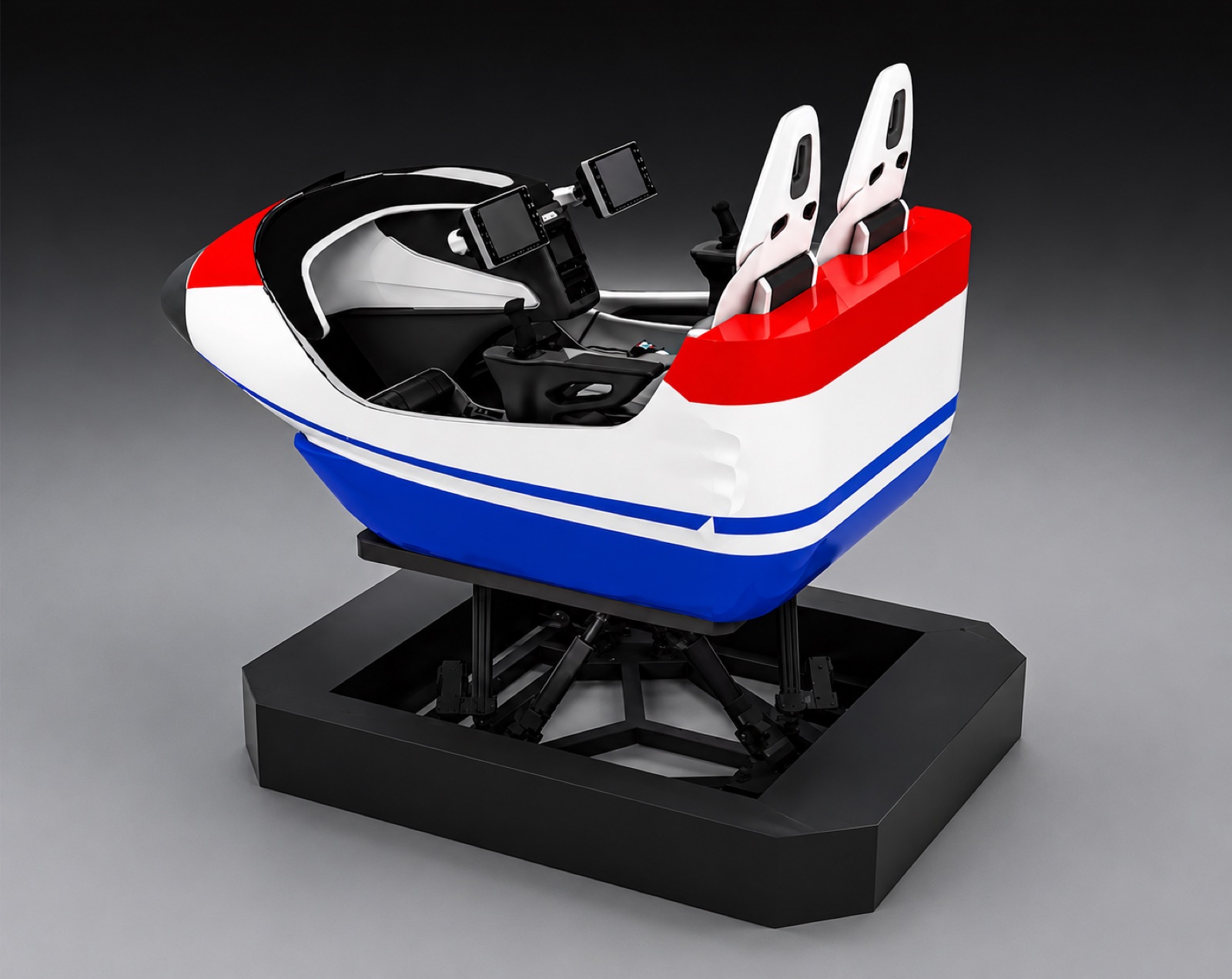
A motion simulator is more suitable when the project needs stronger physical cues, public immersion or advanced handling demonstrations. Motion can range from compact 4DOF platforms to full 6DOF systems, depending on the aircraft type, payload, room size and budget.
- Fixed-base trainer: efficient for procedures, cockpit logic and classroom teaching.
- 4DOF motion trainer: compact motion cues for general aviation and education projects.
- 6DOF full-motion system: stronger immersion for airliner, helicopter, eVTOL or public experience projects.
Plan the cockpit, controls and avionics together
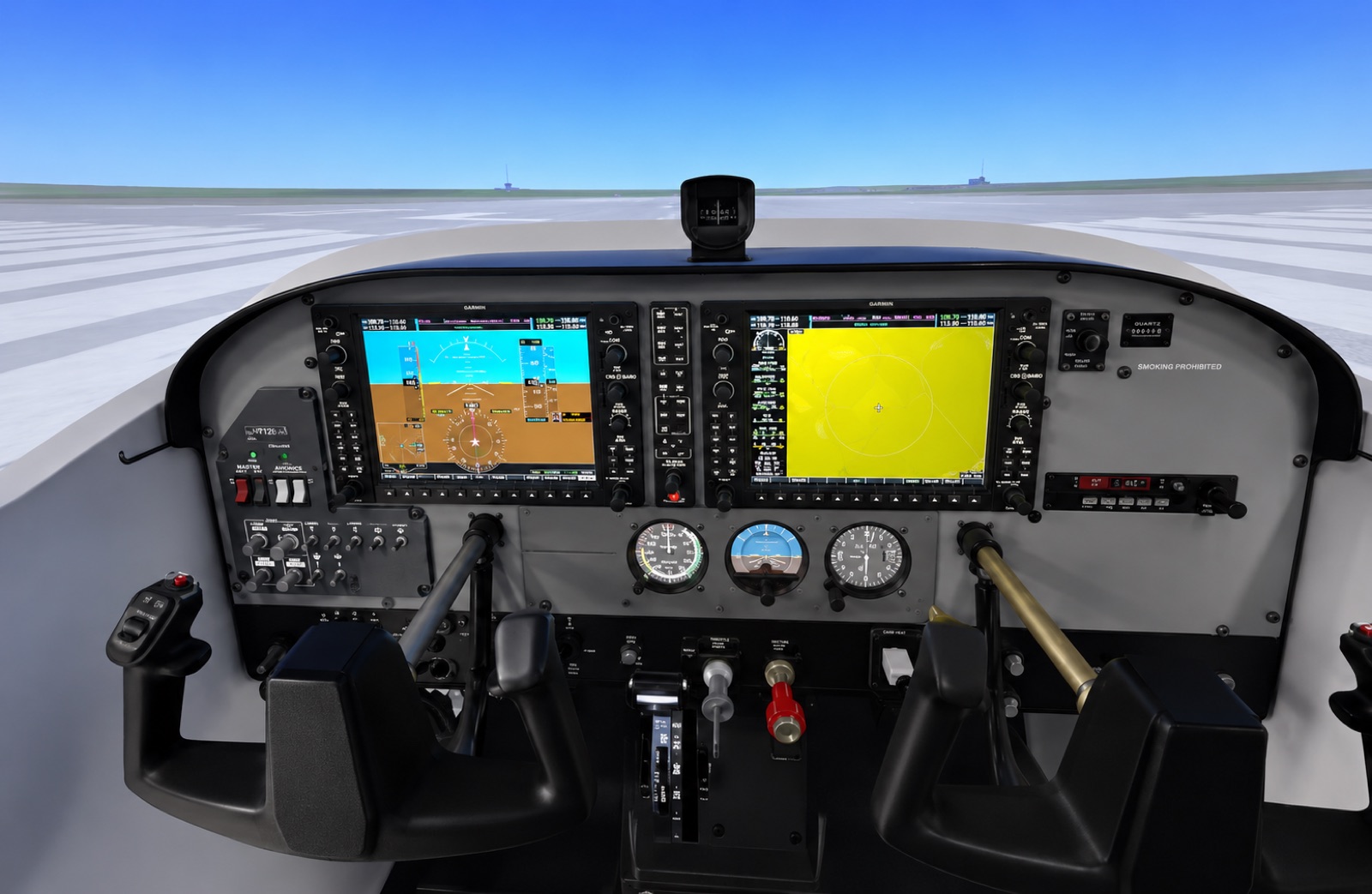
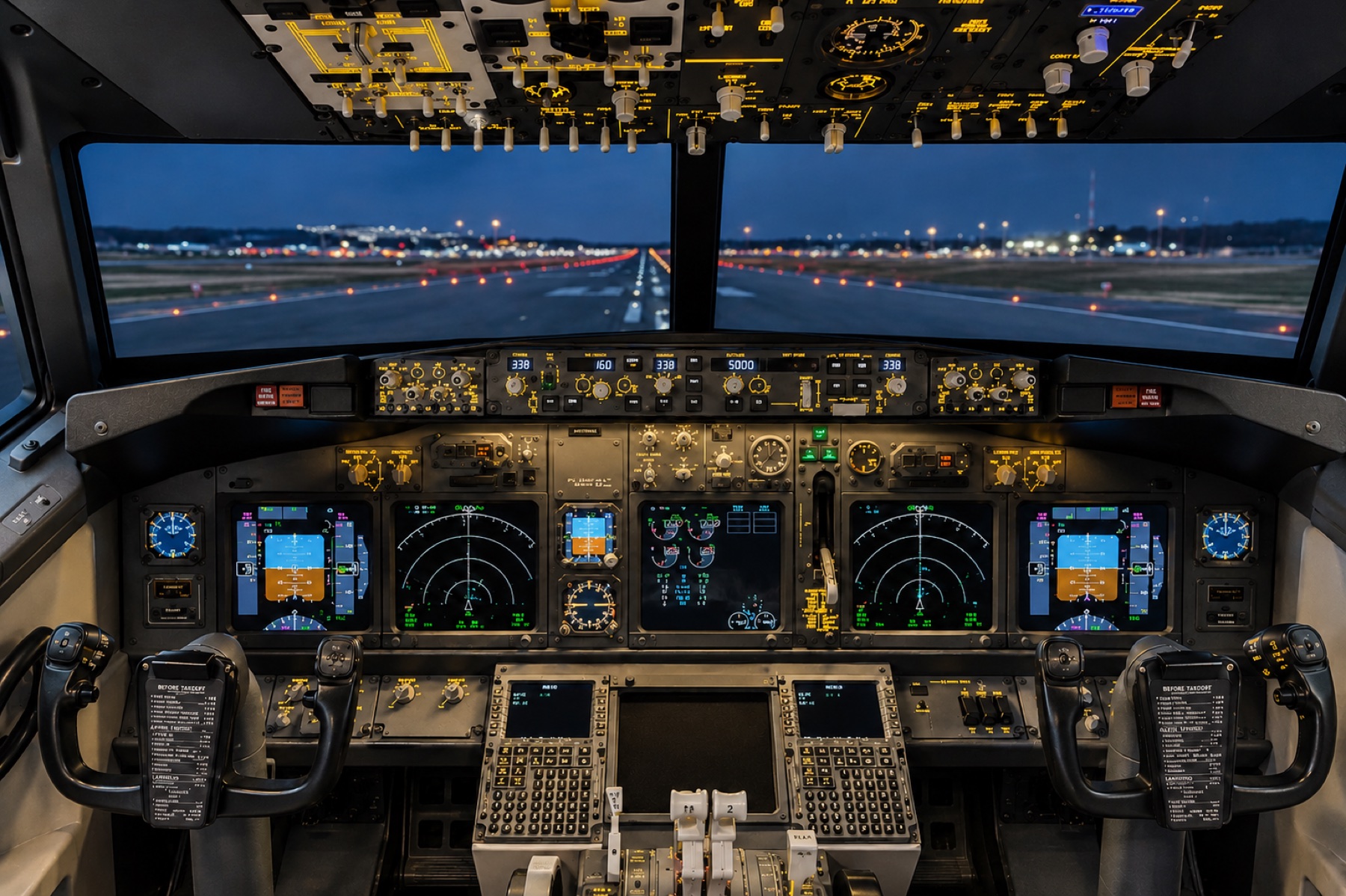
The cockpit should match the daily use of the simulator. A dual-crew airliner system needs clear captain and first-officer positions, overhead panel access, center pedestal controls and instructor visibility. A Cessna 172 system may focus more on G1000 avionics, yoke loading, rudder pedals and progressive flight instruction.
For helicopter and eVTOL projects, the control layout becomes even more important. Cyclic, collective, anti-torque controls, transition logic or electric-aircraft operating concepts should be considered early, because they affect mechanical design, software mapping and training scenarios.
Match the visual system to the room
The visual system is one of the biggest differences between simulator projects. A compact trainer may use one large display or three screens. A more immersive device may use a 180 degree projection system, panoramic LED display or VR option. The correct choice depends on training purpose, available room, expected visitor flow and maintenance preference.
For overseas projects, room drawings and ceiling height are useful at the quotation stage. They help the engineering team check screen placement, viewing angle, motion envelope, access space, air conditioning and installation path before production begins.
Do not ignore the instructor station
For professional training and education programs, an instructor station often decides whether the simulator is easy to operate every day. Instructors may need scenario control, weather settings, aircraft position reset, fault injection, flight monitoring and replay functions.
A museum or experience venue may need simpler operator tools, shorter mission flows and stable daily operation. A flight school may need more structured lesson control. These requirements should be discussed together with the hardware configuration.
Prepare the key information before asking for a quote
A useful quotation is based on the project scope, not only a product name. When contacting a manufacturer, provide the target aircraft, application, destination country, available room size, required motion level, visual preference and expected schedule.
Foshan Dynamic Technology develops configurable flight simulation platforms for institutional projects, including airliner trainers, Cessna 172 systems, rotorcraft simulators, eVTOL platforms and aviation education devices. The final configuration can be adjusted around cockpit, controls, visuals, motion, software and instructor functions.