The motion question should begin with the training mission
When organizations begin planning a flight simulator project, motion is often one of the first questions: should the simulator use a fixed base or a full-motion platform?
Motion does not automatically make every simulator project more effective, and a fixed-base platform does not necessarily mean limited training value. The right choice depends on the training task, users, installation site, daily operating model and overall project priorities.
For flight schools, aviation colleges, training centers, museums and flight-experience venues, defining the mission before selecting the motion system usually leads to a more practical configuration and quotation.
1. Start with what the simulator must accomplish
Before comparing fixed-base and full-motion systems, define the work the simulator must perform. Is the primary purpose cockpit familiarization, SOP and checklist instruction, aircraft-handling practice, instrument training, crew coordination, flight demonstration or public experience? The buyer should also define who will use the device, how often it will operate and what room is available.
These answers are more important than selecting an aircraft type or number of motion axes. Two organizations requesting a B737NG or Cessna 172 simulator may still require very different systems.
- Primary lesson objectives and trainee experience level
- Single-user, dual-crew or instructor-led group operation
- Expected daily operating hours
- Available floor area, clear height and installation access
- Any destination-country or regulatory qualification target
2. When does a fixed-base simulator make sense?
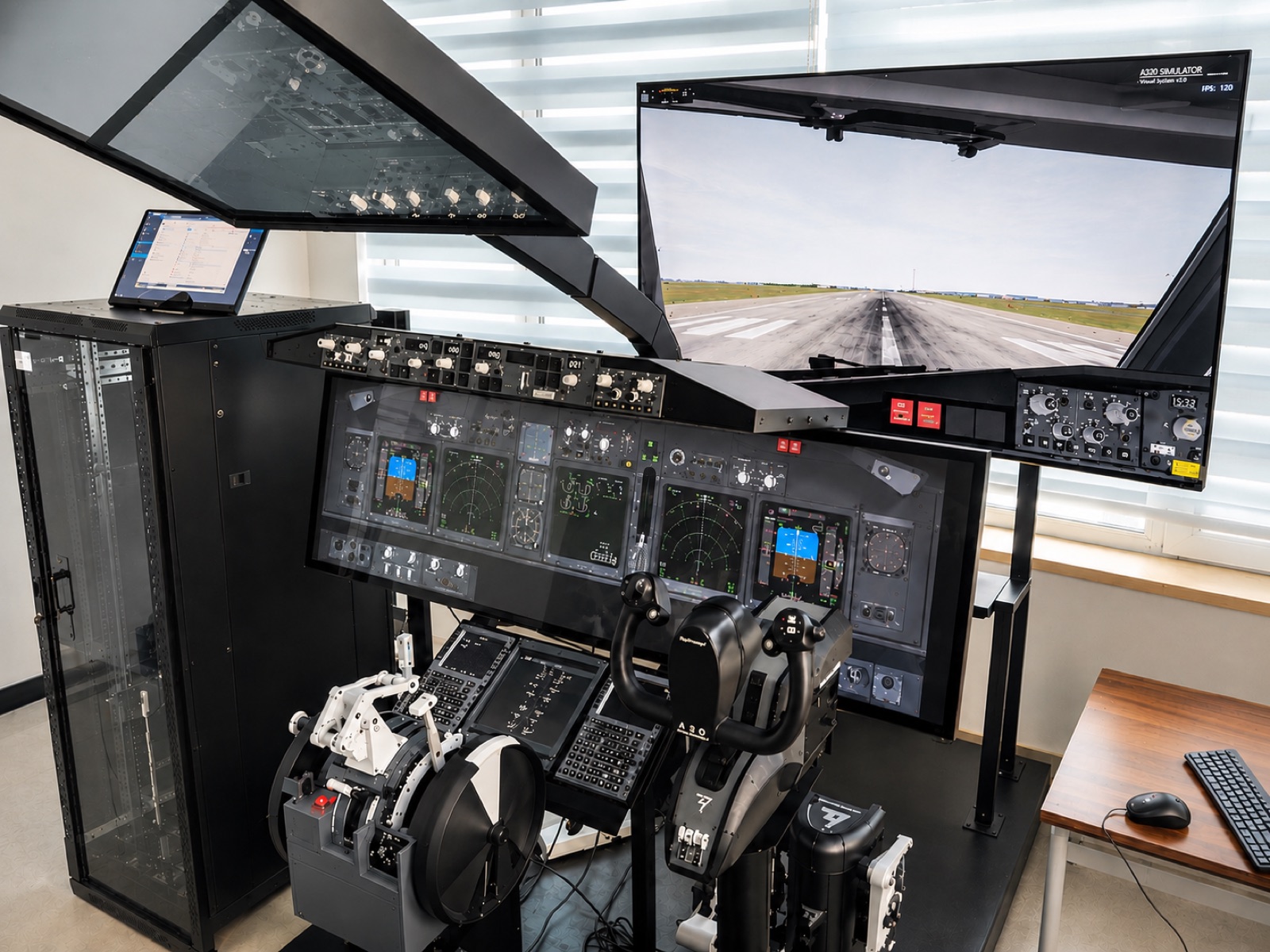
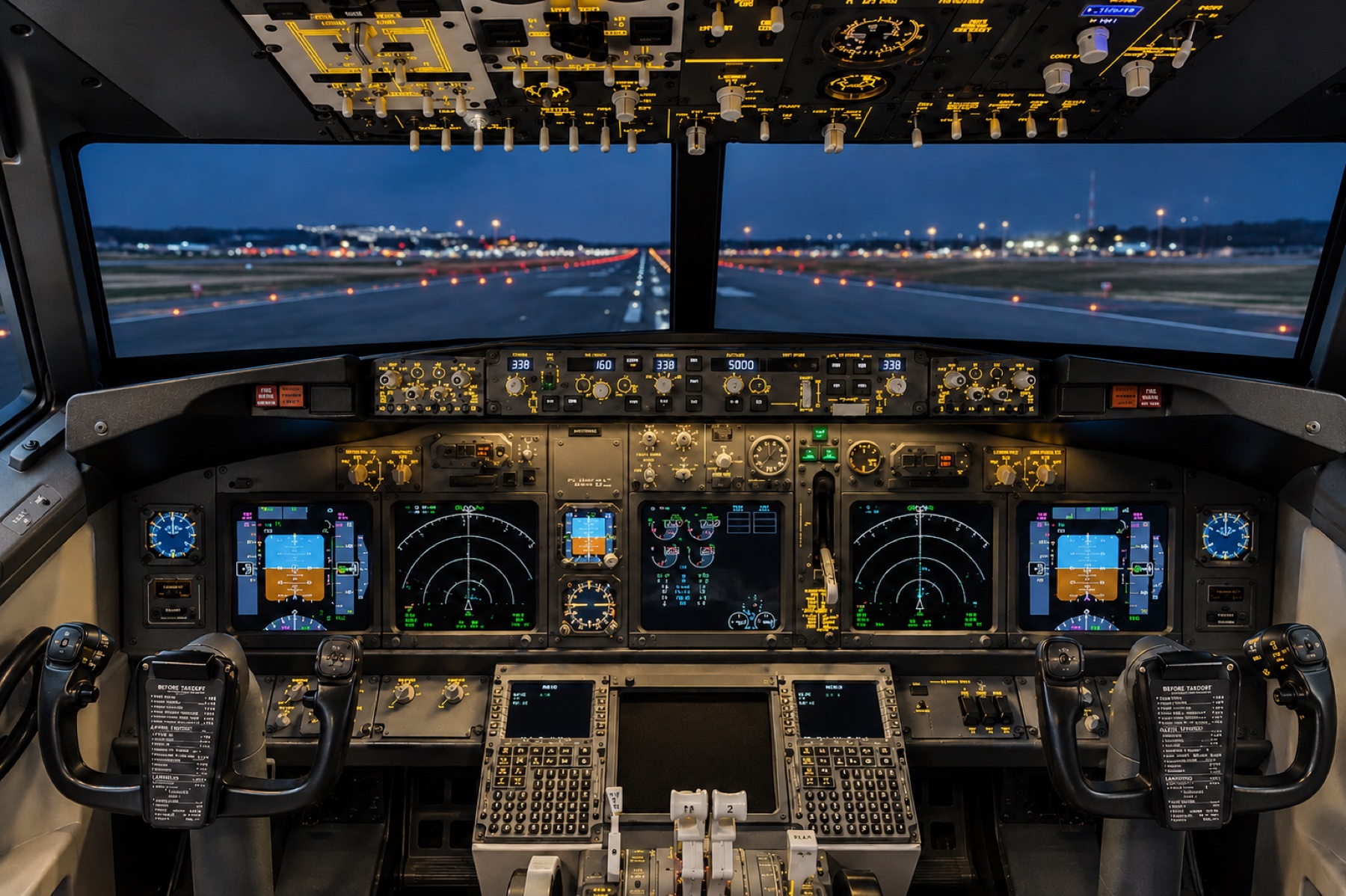
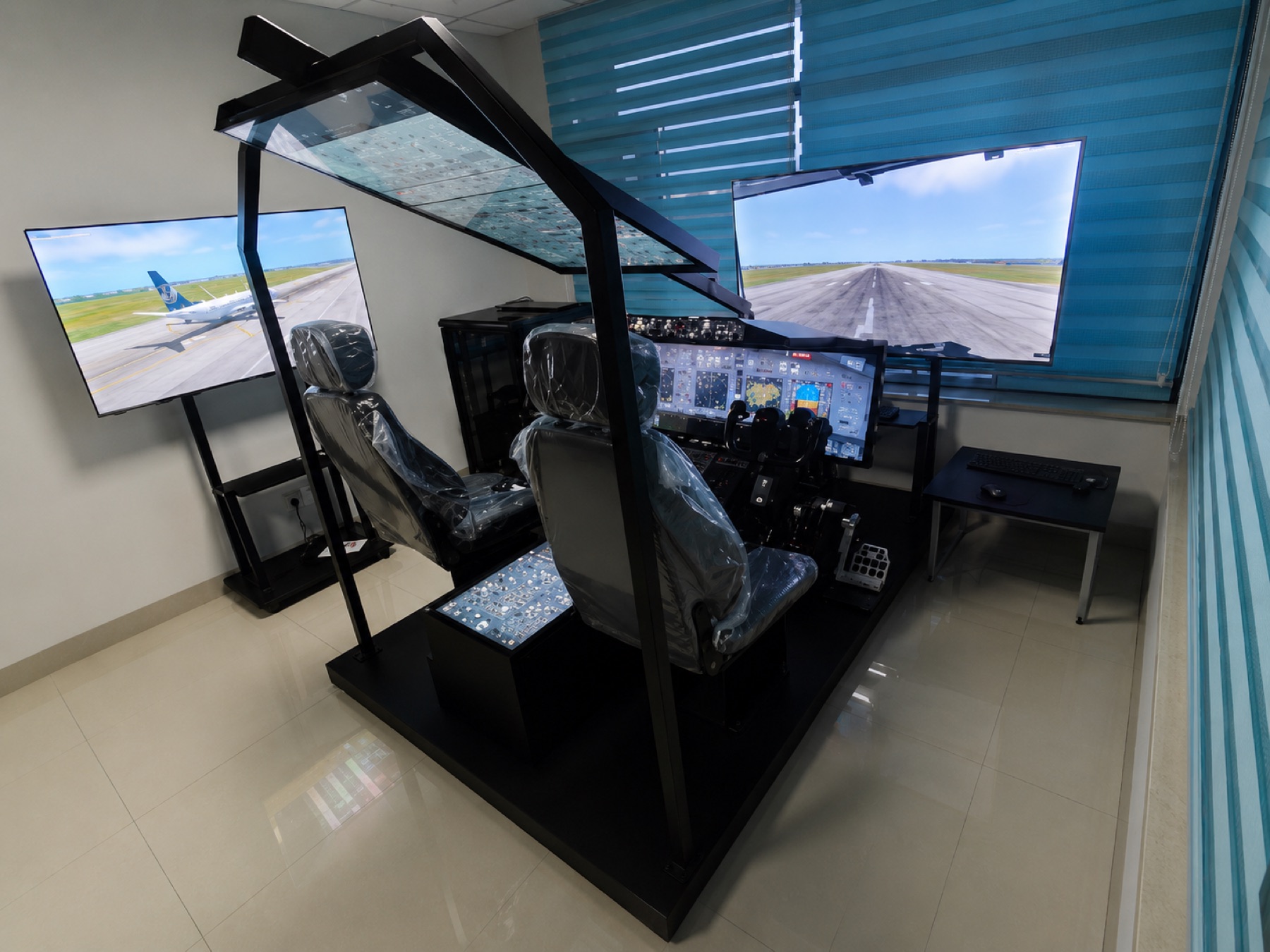
A fixed-base simulator installs the cockpit, flight controls, avionics, visual system and instructor functions on a stable structure without a motion platform. It is often the more direct choice when the project focuses on cockpit flow, panel logic, checklists, instrument operation, crew roles and instructor-led demonstrations.
A compact B737NG IPT, for example, can place the main flight-deck areas, controls and a 65-inch visual display within a reference footprint of approximately 2 × 2 × 2 metres. An A320 IPT can use a one-to-one cockpit layout with three 55-inch displays to support SOPs, checklists, cockpit familiarization and crew coordination.
For general-aviation instruction, a Cessna 172 FTD can combine Garmin G1000 avionics, linked force-feedback controls and a 180-degree projection system for procedure, instrument and instructor-led training.
Fixed base should not be interpreted as low specification. A well-designed fixed-base trainer may deliver more daily teaching value than a motion system whose training objective has not been clearly defined.
- More straightforward room and installation planning
- Easier access for instructors and trainees
- Efficient use in classrooms and repeated procedure lessons
- No requirement for a protected motion envelope
- A generally simpler daily operating workflow
- More project resources available for cockpit, controls, avionics, visuals or instructor functions
3. When does full motion add value?
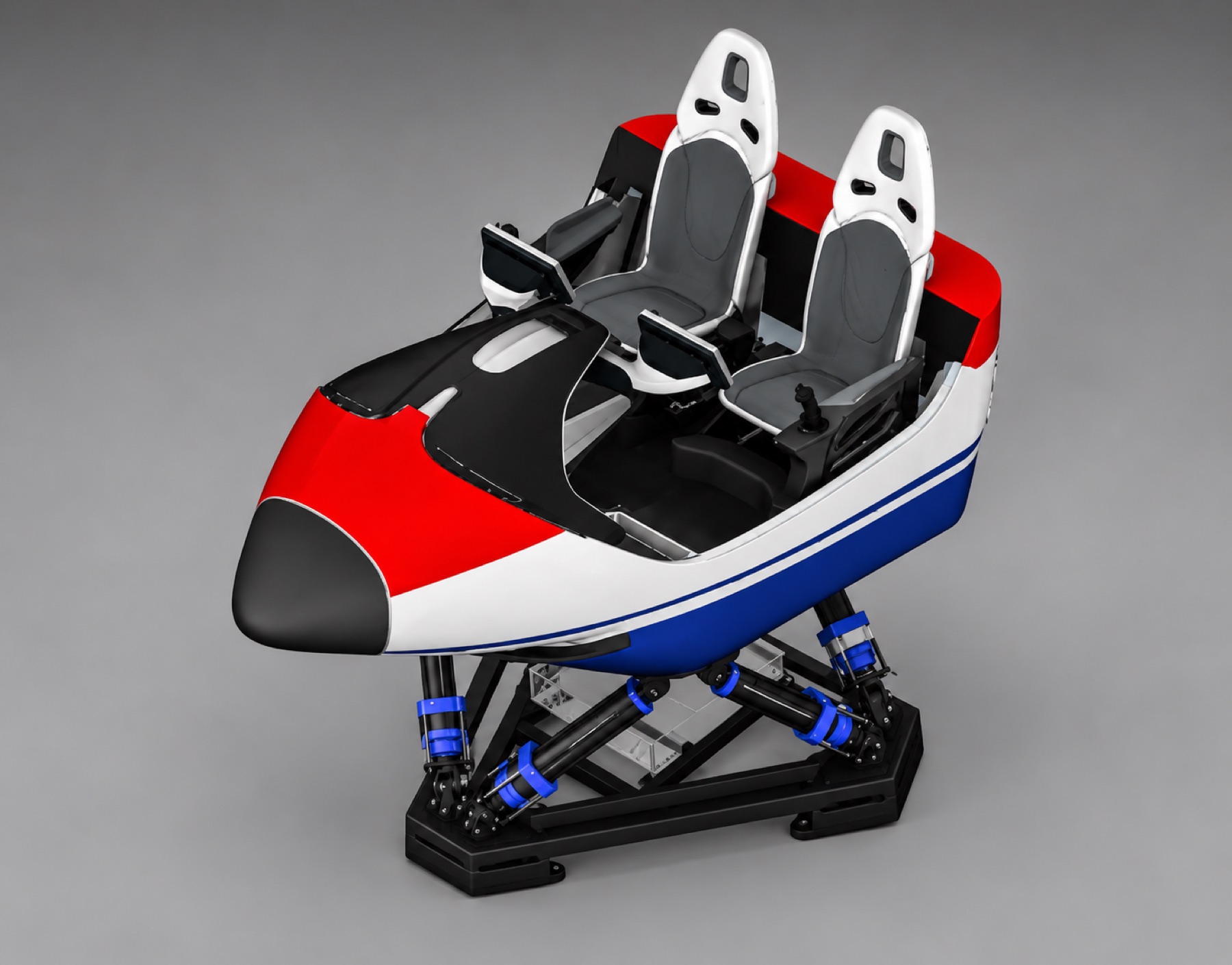
A motion simulator uses a moving platform to provide pitch, roll, heave and other physical cues. It becomes more relevant when the project has a defined need for stronger immersion, attitude-change cues or handling demonstrations.
Foshan Dynamic's C172 6DOF configuration combines a six-degree-of-freedom platform with approximately 300 millimetres of travel and a three-screen visual system. The B737NG 6DOF configuration uses an enclosed dual-crew cockpit, a six-degree-of-freedom platform and a 220-degree panoramic LED visual system.
The motion platform should support the training mission rather than simply make the equipment appear more advanced. If most lessons focus on panel familiarization, checklists and normal procedures, motion may not be the highest-priority investment.
- Physical cues related to aircraft attitude and movement
- Coordination between control inputs, visuals and motion
- Immersive dual-crew operation
- High-immersion teaching in an aviation college or training organization
- Visitor engagement in a museum, science center or flight-experience venue
4. Look beyond a choice between fixed base and 6DOF
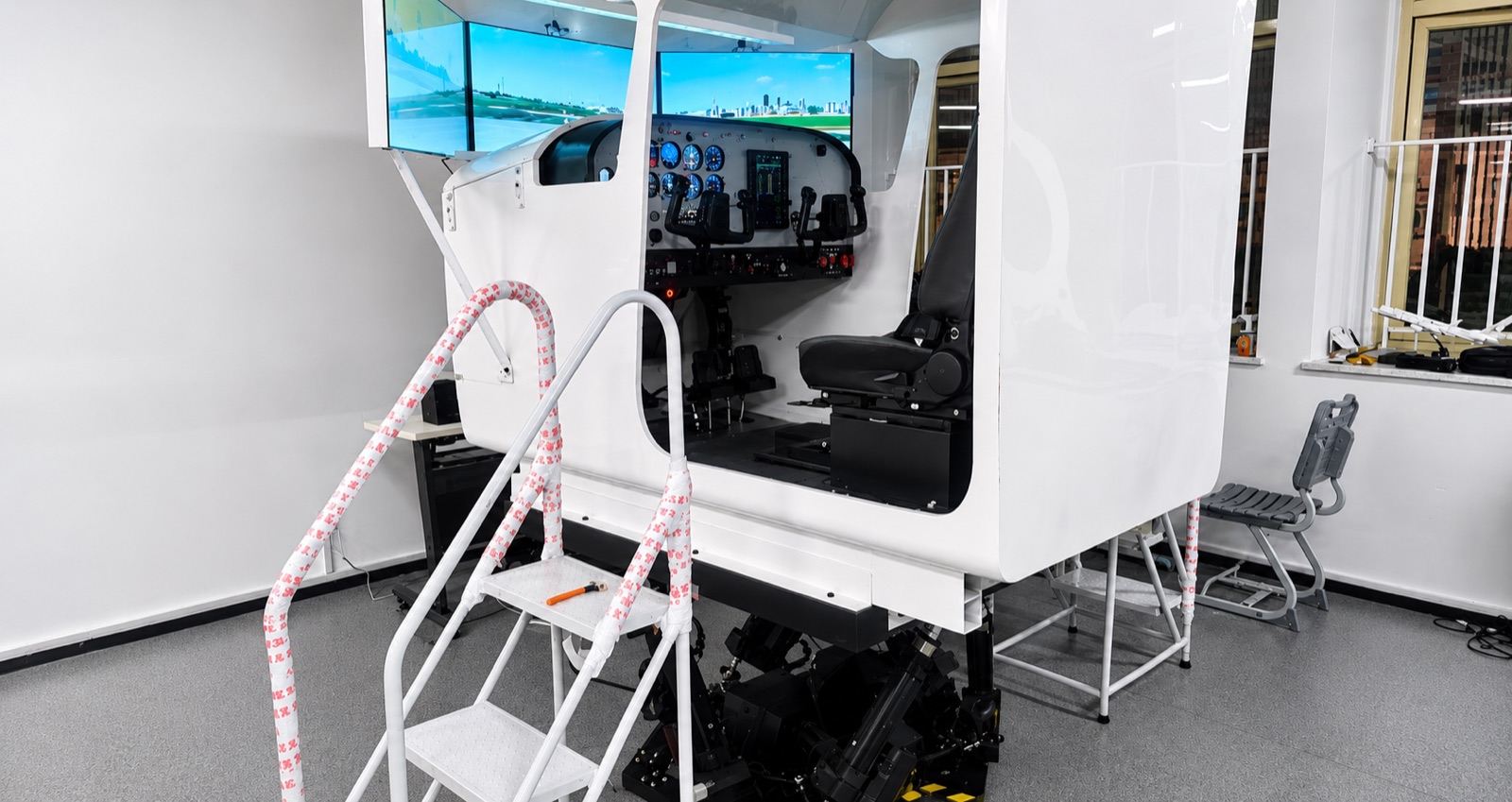
The available options are not limited to a fixed platform or a large six-degree-of-freedom system. A compact motion platform can add controlled physical cues within a smaller room.
The C172 D4 motion trainer, for example, uses a four-actuator platform in a reference footprint of approximately 1.8 × 2 metres. It can introduce motion cues without requiring a dedicated full-motion simulator hall.
The correct level should follow the lesson plan—not simply the largest number of motion axes.
- Fixed base: focused on procedures, avionics, cockpit workflow and classroom teaching
- Compact motion: adds basic motion cues while retaining a smaller installation footprint
- 6DOF motion: supports projects that require a broader motion range and higher immersion
5. The room may decide before the budget does
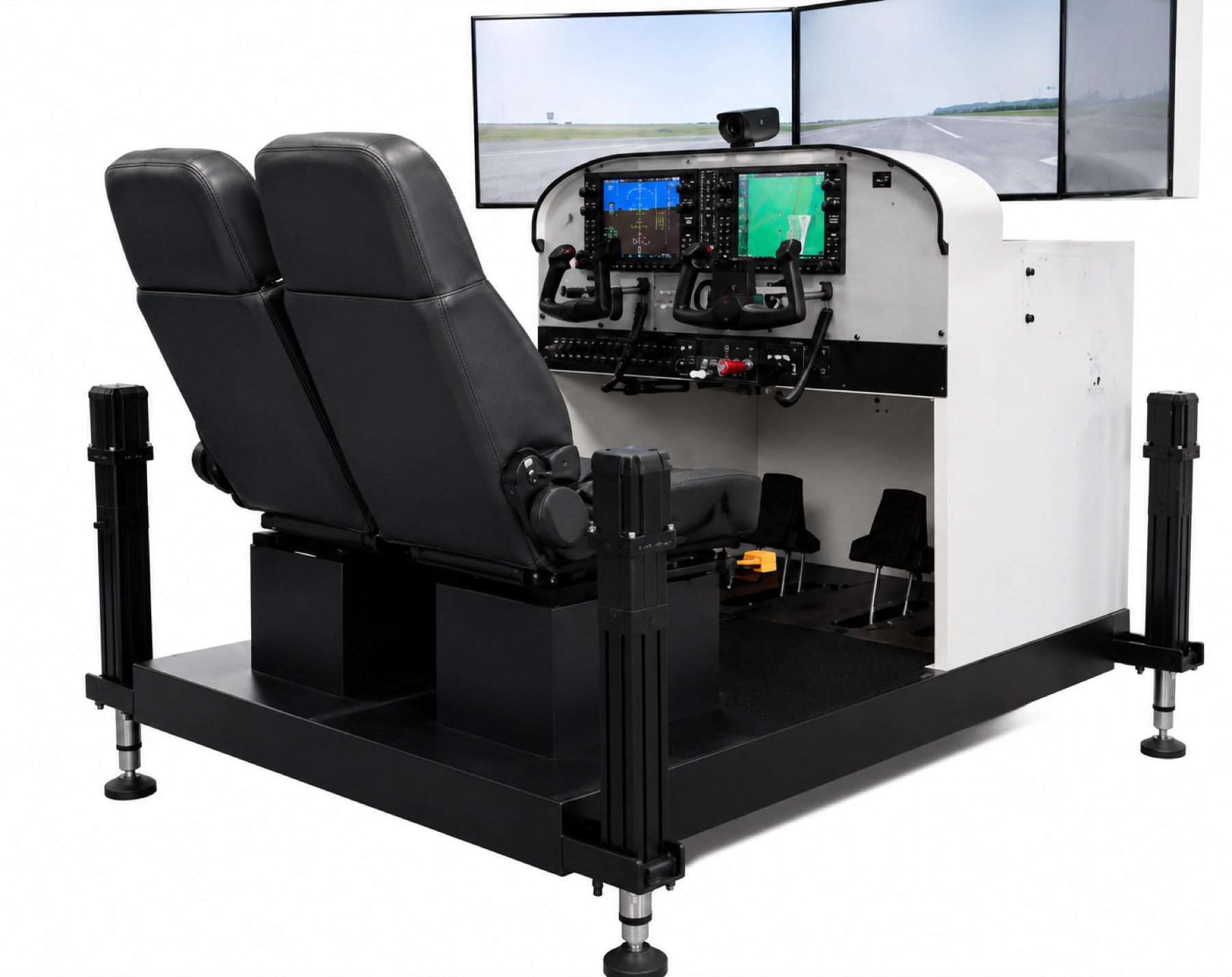
A full-motion installation must account for the motion envelope, clear ceiling height, safe access, delivery route, electrical conditions and maintenance space.
The C172 6DOF has a reference footprint of approximately 3 × 3 metres, and site planning should provide at least 3.5 metres of clear indoor height. The B737NG 6DOF system has a reference footprint of approximately 6 × 6 metres. Its enclosed cockpit, panoramic visuals and motion platform require more detailed delivery and installation planning.
A fixed-base system does not need a motion envelope, but the visual solution still affects the room. A 180-degree projection system requires more visual space and greater control of ambient light than a single-display or three-display arrangement.
- Room length, width and clear height
- Door, corridor, lift and delivery-route dimensions
- Preferred simulator orientation
- Space for instructors, observers and trainees
- Electrical, air-conditioning and ventilation conditions
- Room photographs or a simple dimensioned floor plan
6. Compare daily operation, not only the initial purchase
A simulator must support long-term teaching or operation, so the daily workflow should be evaluated alongside the hardware. Fixed-base devices usually allow easier trainee access and can be practical for consecutive classroom sessions. Motion systems require a defined safe operating area and should include motion-platform startup, shutdown and inspection in the operating procedure.
More complex hardware is not automatically the right match for every operating team. The configuration should reflect operating frequency, staff capability and available support.
- Expected daily operating hours and users per session
- How instructors start and control scenarios
- Routine inspection procedures
- Components requiring scheduled maintenance
- Scope of remote and on-site support
- Training required for local operators
7. Prioritize the functions that create teaching value
When the budget is limited, protect the functions that directly support the training mission. For a procedure-training project, complete main-panel, overhead, center-pedestal, flight-control, avionics-display, instructor and stable software functions may be more important than motion.
For handling demonstrations, immersive teaching or public experience, motion, a wide visual field and the cockpit environment may deserve higher priority.
- Define the primary learning objective
- Identify the required cockpit and control coverage
- Confirm instructor and software functions
- Select a visual system that fits the lesson and room
- Decide whether motion cues add measurable value to the program
- Verify installation and daily operating conditions
- Compare complete project quotations only after the scopes are aligned
8. Separate platform configuration from regulatory qualification
The standard simulators shown on Foshan Dynamic's website are intended for training, education, cockpit familiarization, procedure demonstration and flight-experience projects. They are not supplied as FAA- or EASA-qualified training devices.
If a project has a regulatory qualification target, identify the destination country, authority, intended device category, documentation requirements and validation scope at the beginning of the inquiry. Qualification, testing, documentation and destination-country compliance support must be evaluated as separate project requirements. They should not be assumed from the product name, appearance or number of motion axes.
Fixed-base and full-motion inquiry checklist
Prepare the following information before contacting a supplier so the proposed platform and quotation can be matched to the project rather than based on assumptions.
- Organization type and destination country
- Target aircraft and primary application
- Number and type of trainees, instructors or crew positions
- Required cockpit zones and controls
- Fixed-base, compact-motion or 6DOF preference
- Visual-system and instructor-function requirements
- Room dimensions, clear height and delivery access
- Expected daily operating hours
- Installation, operator-training and support requirements
- Target project schedule and any regulatory qualification objective
From platform choice to project proposal
There is no single fixed-base or full-motion answer that fits every simulator project. If the main objective is cockpit workflow, procedure teaching, avionics familiarization and classroom use, a fixed-base platform is often an efficient starting point. If physical motion cues, handling demonstrations or immersive experience are central to the mission, a compact-motion or 6DOF system may be more appropriate.
Send Foshan Dynamic Technology your training mission, target aircraft, destination country, room dimensions, motion requirement and expected schedule. Our team can review the application and prepare a project-specific configuration and quotation.