One aircraft type, three different projects
The Cessna 172 is the most requested training aircraft in general-aviation simulator projects. Yet two inquiries for a C172 simulator can describe very different devices: a fixed-base flight training device for instrument procedures, a compact motion trainer for classroom instruction, or a six-degree-of-freedom full-flight simulator for high-immersion training and demonstration.
All three configurations exist in Foshan Dynamic Technology's product line, and each answers a different daily mission. Choosing between them is not a question of good or better. It is a question of what instructors and trainees need to do with the device, how much room is available, and what schedule the project must meet.
1. Start with what the simulator must teach
Before comparing hardware, define the training outcomes. A flight school preparing students for private-pilot and instrument training may prioritize full-task practice, Garmin G1000 avionics workflow and instructor-led scenario control. An aviation college may need repeatable classroom lessons with good visibility for observers. A STEM program or experience center may value intuitive operation, physical motion cues and reliable daily use by visitors.
The mission decides the configuration—not the other way around. A 6DOF platform in a small classroom, or a fixed-base device in a public experience venue, are both mismatches that a clear mission statement would have prevented.
2. The fixed-base C172 FTD: full-task training without motion
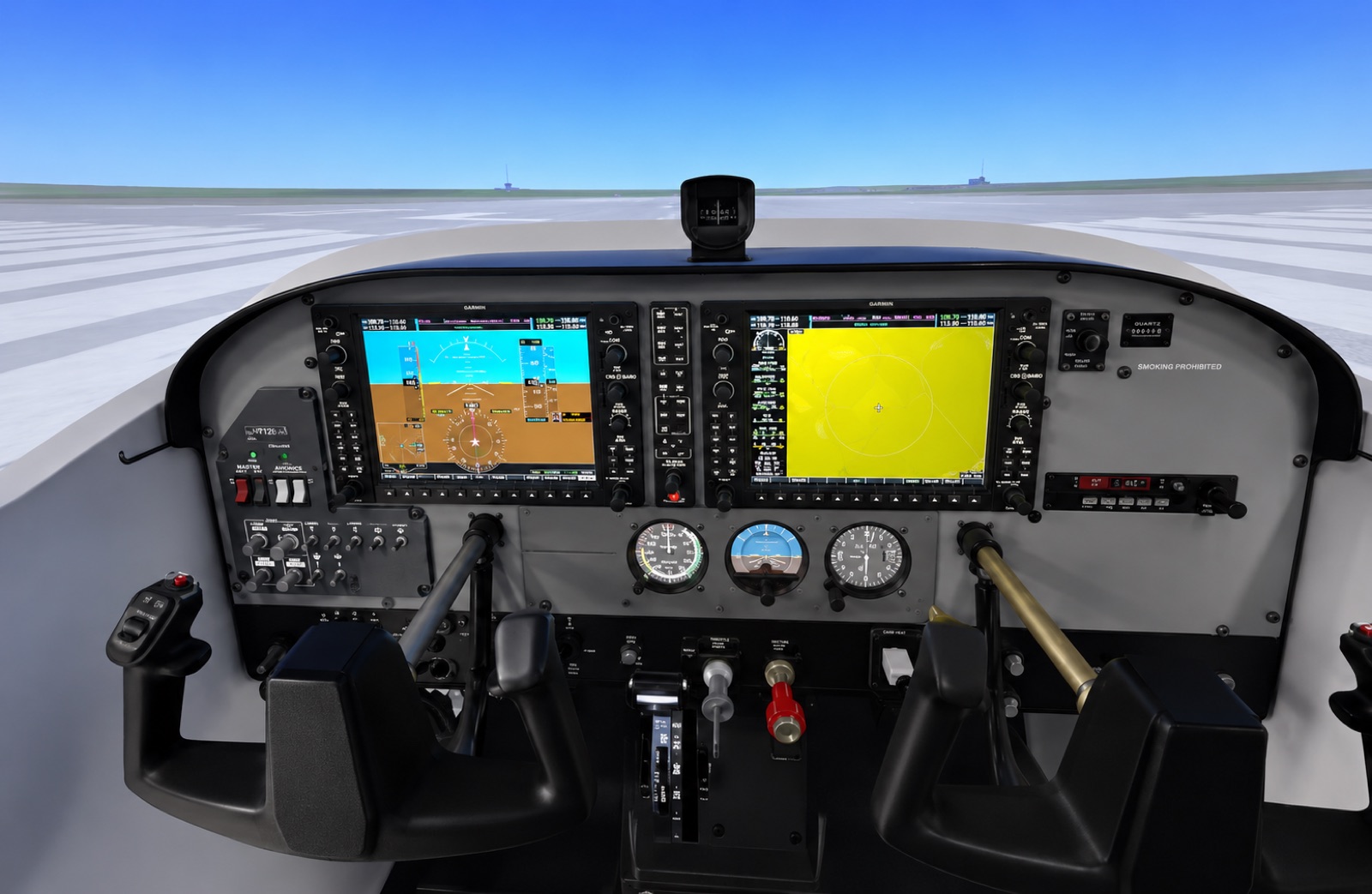
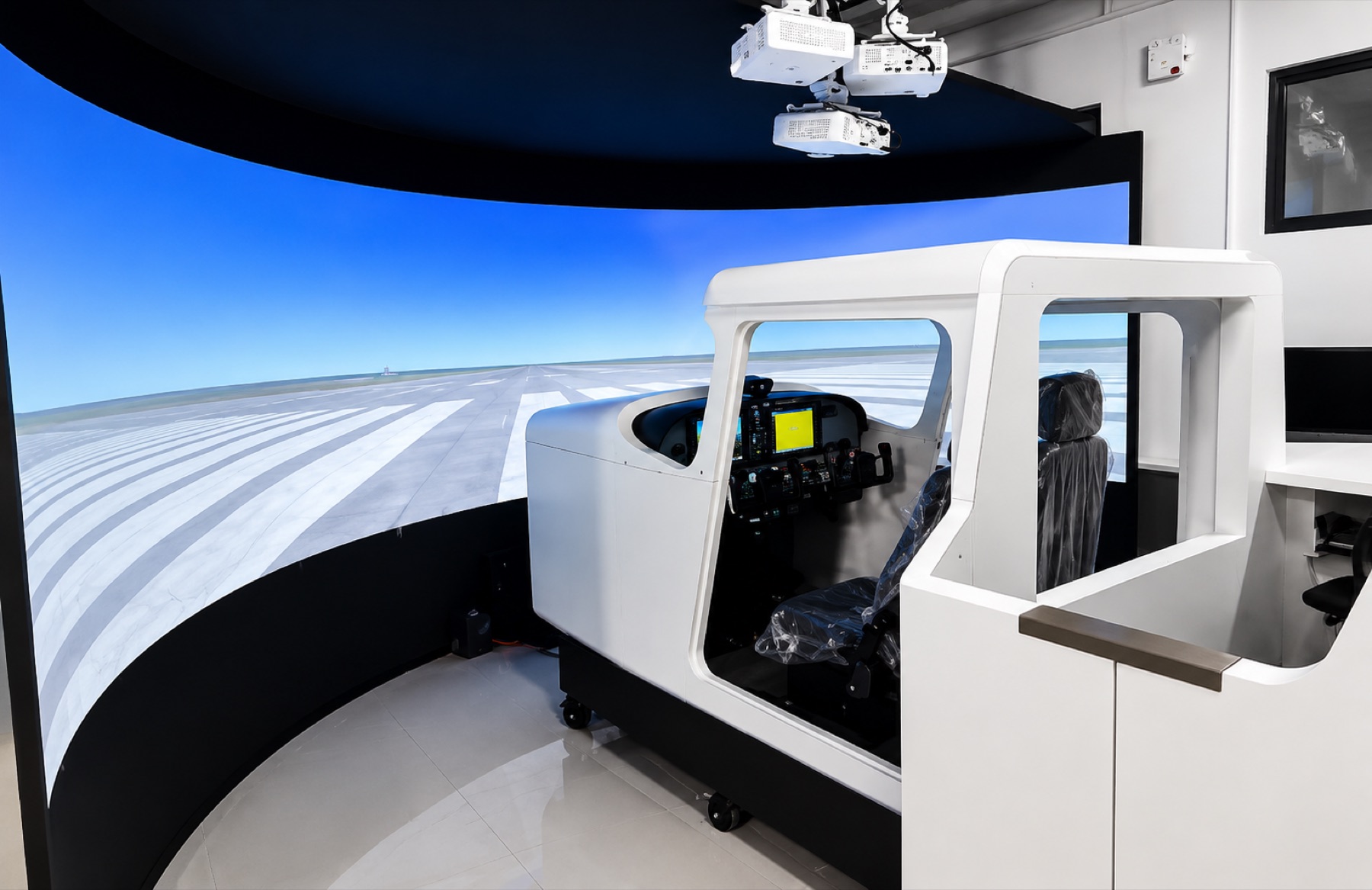
Foshan Dynamic's Cessna 172 FTD is a full-task flight training device. It combines Garmin G1000 avionics, linked three-axis force-feedback controls and a 180-degree projection system. The instructor station supports basic flight, procedures, instrument training and demonstrations, making it suitable for aviation colleges, flight schools and general-aviation training centers.
The published footprint is approximately 5 × 5 metres with a fixed base, and the lead time is around 90 days. For organizations whose core need is instrument procedures, navigation and G1000 familiarity, the FTD delivers the widest training coverage per square metre and avoids the additional power, maintenance and room requirements of a motion platform.
3. The compact D4 motion trainer: motion cues in a classroom footprint
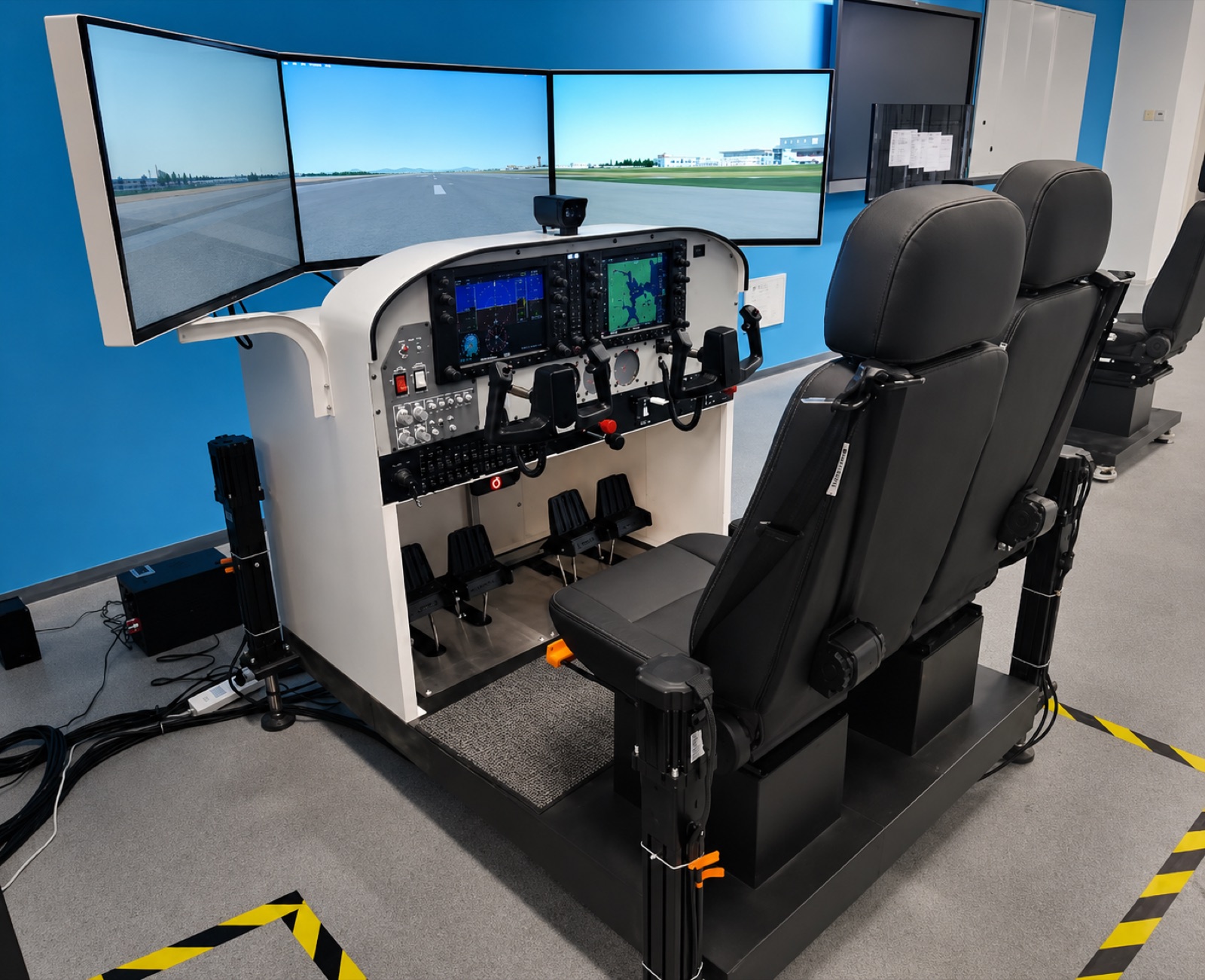
The Cessna 172 D4 motion trainer takes a different position. It keeps Garmin G1000 avionics with backup instruments, or an optional traditional-instrument layout, and adds a four-actuator motion platform with approximately 15 degrees of pitch and 17 degrees of roll cues. Dual linked controls and three-axis force feedback support both VFR and IFR instruction.
Its footprint is only about 1.8 × 2 metres, with three 31.5-inch displays and a lead time of around 30 days—the shortest of the three configurations. This makes it a practical choice for classrooms, smaller training rooms and organizations that want physical motion cues without a dedicated simulator hall.
4. The C172 6DOF full-flight simulator: maximum immersion
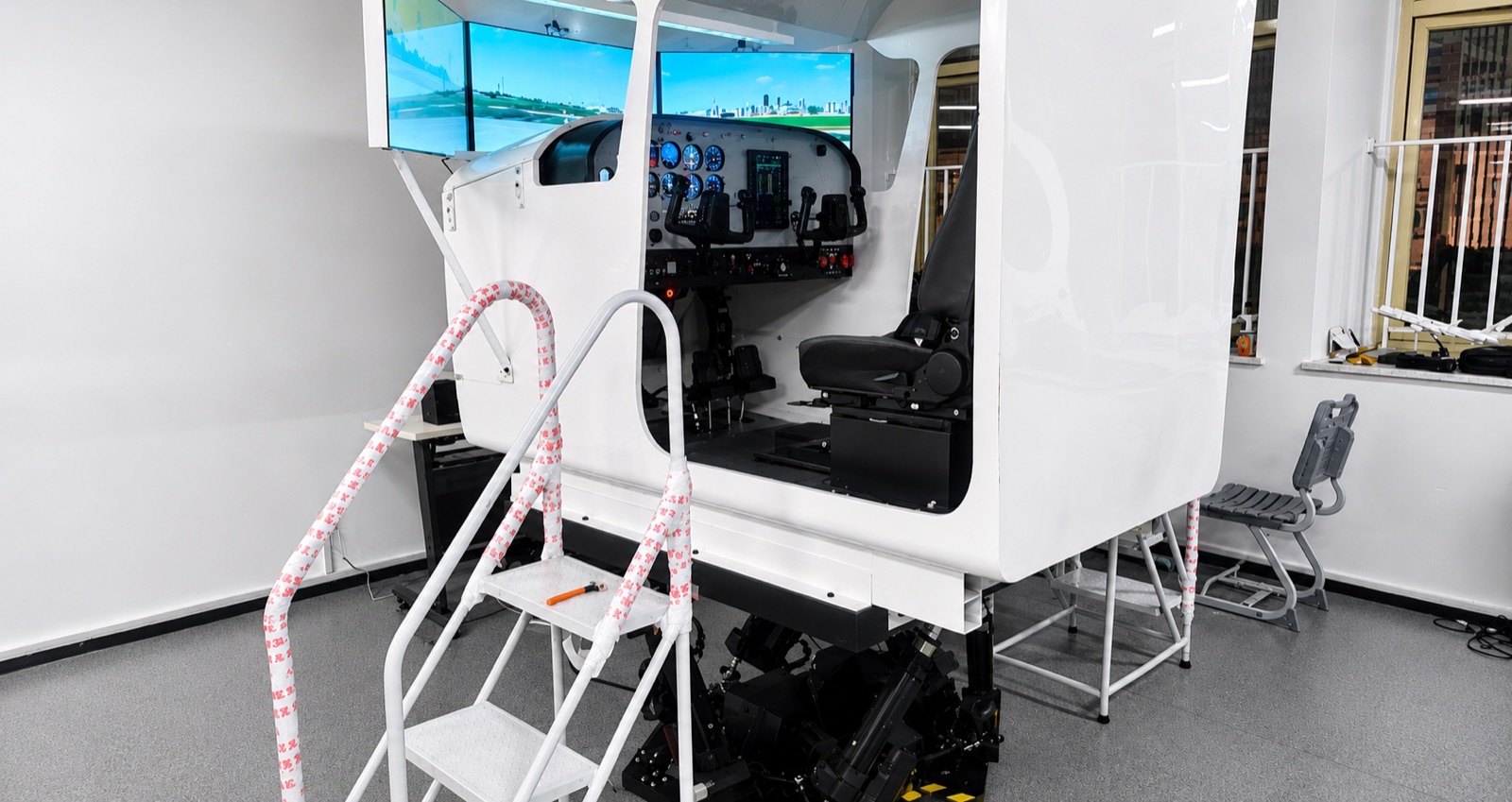
The Cessna 172 6DOF FFS is the highest configuration of the three. It combines a C172 cockpit, professional force-feedback controls and a six-degree-of-freedom motion platform with 300 millimetres of travel. The visual system uses three screens at 5760 × 1080 resolution, and the avionics can be configured either with Garmin G1000 or simulated mechanical instruments.
The published footprint is approximately 3 × 3 metres, with a lead time of around 60 days. Site planning should allow at least 3.5 metres of clear indoor height for the motion envelope. This configuration suits aviation colleges, training organizations, STEM programs and demonstration centers that need high-immersion procedure, instrument and handling practice.
5. Compare the three configurations side by side
The table below summarizes the published specifications of the three platforms. Use it to align the training mission with room size, schedule and budget before requesting a quotation.
- C172 FTD: fixed base, G1000, 180° projection, 5 × 5 m footprint, instructor station, approx. 90-day lead time.
- C172 D4 Motion: 4-actuator motion, approx. 15° pitch / 17° roll, G1000 or traditional instruments, 3 × 31.5-inch displays, 1.8 × 2 m footprint, approx. 30-day lead time.
- C172 6DOF FFS: 6DOF platform with 300 mm travel, G1000 or simulated mechanical instruments, 5760 × 1080 three-screen visuals, 3 × 3 m footprint, min. 3.5 m ceiling height, approx. 60-day lead time.
6. Plan the room before choosing the platform
Room conditions often decide the configuration more than budget does. A 180-degree projection FTD needs a proportionally larger and darker space than a three-display system. A 6DOF platform needs clear ceiling height, a reinforced floor area and safe access around the motion envelope. A compact D4 trainer is the most tolerant and can be installed in an ordinary classroom.
For overseas installations, provide room length, width, clear ceiling height, door and corridor dimensions along the delivery path, and photographs or a simple dimensioned floor plan. This allows the engineering team to verify screen placement, motion envelope and installation access before production begins.
7. Consider daily operation and instructor workflow
A simulator that is difficult to operate will be used less, regardless of its hardware level. Flight schools should confirm scenario control, weather settings, aircraft repositioning and flight-monitoring functions with the instructor station. Colleges may need structured lesson delivery for groups, while STEM and experience venues usually prefer shorter, simpler session flows.
Discuss these workflows during configuration planning. The three C172 platforms can each be adapted around instructor functions, but the requirements should be defined before the cockpit, visual system and motion platform are finalized.
8. Separate configuration from regulatory qualification
Foshan Dynamic's standard Cessna 172 configurations are delivered as training and education platforms, not as FAA- or EASA-qualified devices. If your project targets a specific regulatory qualification, state the target authority and intended device category at the beginning of the inquiry, so that documentation and validation support can be evaluated as a separate project requirement.
A practical C172 simulator checklist
Prepare the following information before requesting a quotation so the proposal matches your project instead of an assumed configuration.
- Organization type: flight school, college, STEM program, museum or experience center
- Primary training application: procedures, instruments, VFR/IFR instruction, demonstration or visitor experience
- Preference for fixed base, compact 4DOF or 6DOF motion
- Avionics preference: Garmin G1000 or traditional instruments
- Room dimensions, clear ceiling height and installation access path
- Expected daily operating hours and number of trainees
- Required instructor-station functions
- Destination country, expected schedule and any qualification target
From comparison to project proposal
If the daily mission is full-task procedure and instrument training, the fixed-base C172 FTD with its 180-degree projection and instructor station is the strongest starting point. If motion cues matter but the room is small and the schedule is short, the compact D4 motion trainer fits a classroom footprint with a 30-day lead time. If the project needs maximum immersion for training or demonstration, the C172 6DOF FFS with 300 mm travel and triple-screen visuals is the appropriate direction.
Send Foshan Dynamic Technology your training application, destination country, room size, motion preference and expected schedule. The engineering team will help match the C172 configuration to the mission and prepare a project-specific quotation.